
Category: Mindfulness

  • Introducing Clayfulness: A beautiful way to combine mindfulness meditation and clay work

    Introducing Clayfulness: A beautiful way to combine mindfulness meditation and clay work

    Clayfulness by Samuel López-Lago

    Samuel López-Lago first reached out to me while I was running Benefits of Mindfulness, an earlier project that eventually evolved into Kohẓen.

    Through our conversations, Samuel introduced me to the UNESCO Body & Mind Wellness Club, where he was volunteering. Its work brings together creativity, cultural expression and wellbeing through activities ranging from traditional crafts to community drum circles.

    Samuel’s Clayfulness explores the relationship between creativity and mindfulness through working with clay. He originally contributed the piece to my earlier project and kindly agreed to its republication on Kohẓen in 2026.

    Although Kohẓen now focuses on Cypriot Maronite heritage and Cypriot Arabic (Sanna), I’m pleased to preserve Samuel’s thoughtful contribution as part of the project’s history.

    The original article by Samuel follows below.

    About Clayfulness

    Clayfulness is an essay exploring the intersection of mindfulness meditation and working with clay published by Experimenta Editorial. Rooted deeply in scientific research and grounded in the personal practice of the author, the book offers over 20 practical exercises for using clay to achieve mindful states of consciousness. You can find a link to the book here. We hope you find the below article from the author himself interesting and that it inspires you to consider trying out the practice.
    Clayfulness, Samuel Lopez-Lago, clay mindfulness, Kohzen

    How to Get Started with Clayfulness

    Finding tranquillity in today’s busy world is essential for our mental and physical health. One powerful method to achieve this balance is by combining meditation with clay work. This unique practice promotes mindfulness, reduces stress, and fosters creativity, offering a holistic approach to wellness.

    To begin, you only need to gather some basic clay supplies such as air-dry clay and a few sculpting tools. Start by setting aside dedicated time for your practice, ensuring that this period is free from distractions to maximise the benefits. Here’s a guide on how to benefit from and practice this unique meditative art.

    5 Steps of Clayfulness Practice:

    1. Set your intention
    Begin your clay session by setting a clear intention, such as finding relaxation or creating a specific piece. This helps focus your energy and gives purpose to your practice.

    2. Focus on your breath

    Incorporate deep breathing exercises to maintain a calm state. Start with a few minutes of slow, deep breaths to centre yourself and continue this mindful breathing throughout your session.

    3. Engage with the clay
    Pay close attention to the sensory experiences of working with clay. Notice the texture, temperature, and pliability of the material to deepen your connection with the present moment.

    4. Repeat your gestures
    Use repetitive motions like kneading, rolling, or pinching the clay. These actions can be soothing and meditative, similar to repeating a mantra.

    5. Focus on the process, not in the end
    Embrace the imperfections in your work. Focus on the process rather than the outcome, promoting self-compassion and reducing perfectionism.
    Clayfulness, Samuel Lopez-Lago, clay exercise, Kohzen

    Benefits of Mindfulness Meditation Work with Clay 

    Combining the stress-relieving properties of meditation with the tactile experience of working with clay results in a powerful tool for enhancing relaxation. The repetitive motions of moulding and shaping clay help soothe the mind, reducing stress effectively. This practice also naturally encourages mindfulness, as clay work requires focus and attention to detail. Engaging with the texture and form of clay helps you stay present and fully engaged in the moment. Additionally, clay is a versatile medium for artistic expression, offering a therapeutic outlet for emotions and fostering a sense of accomplishment. Beyond the psychological benefits, manipulating clay also improves fine motor skills and hand-eye coordination, which supports both artistic development and cognitive function.

    Takeaways from Clayfulness

    Meditative clay work offers a unique path to holistic wellness, blending the calming effects of meditation with the tactile and creative experience of working with clay. This integrative practice helps reduce stress by soothing the mind through the repetitive motions of moulding and shaping clay. It also enhances mindfulness, as the focus required for clay work encourages you to stay present and fully engaged in the moment. Moreover, clay serves as a versatile medium for artistic expression, allowing you to channel emotions and foster a sense of accomplishment.

    For those interested in delving deeper, “Clayfulness” is an essay exploring the intersection of mindfulness meditation and working with clay published by Experimenta Editorial. Rooted deeply in scientific research and grounded in the personal practice of the author, the book offers over 20 practical exercises for using clay to achieve mindful states of consciousness. These exercises were originally designed by Samuel López-Lago, drawing from his Master’s level training in both crafts and meditation, as well as over a decade of experience in these fields.

    About the photographs:
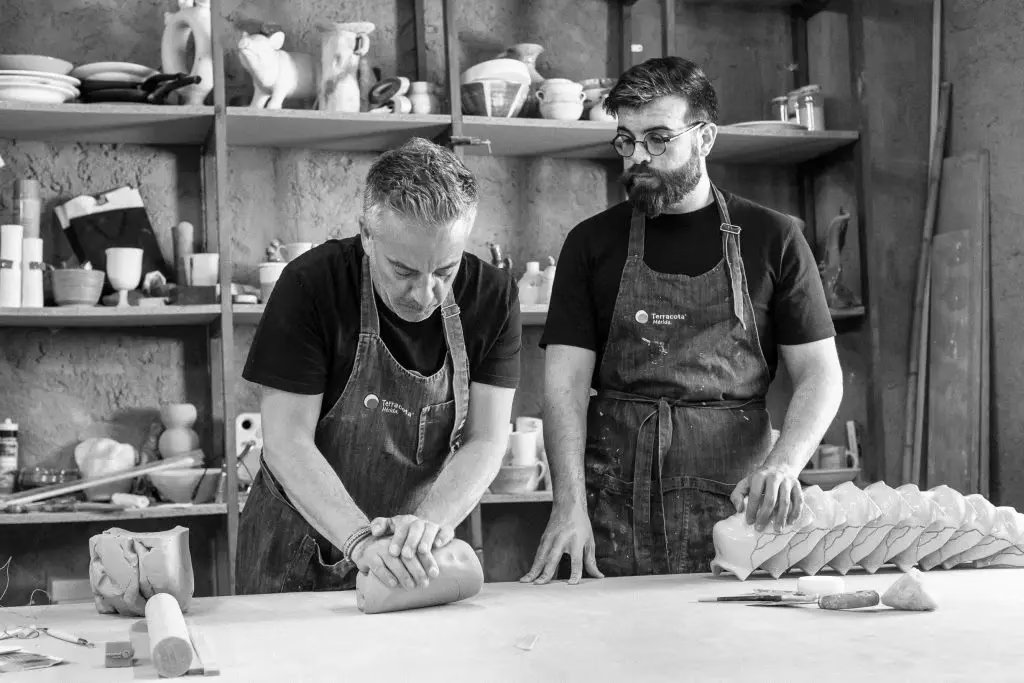
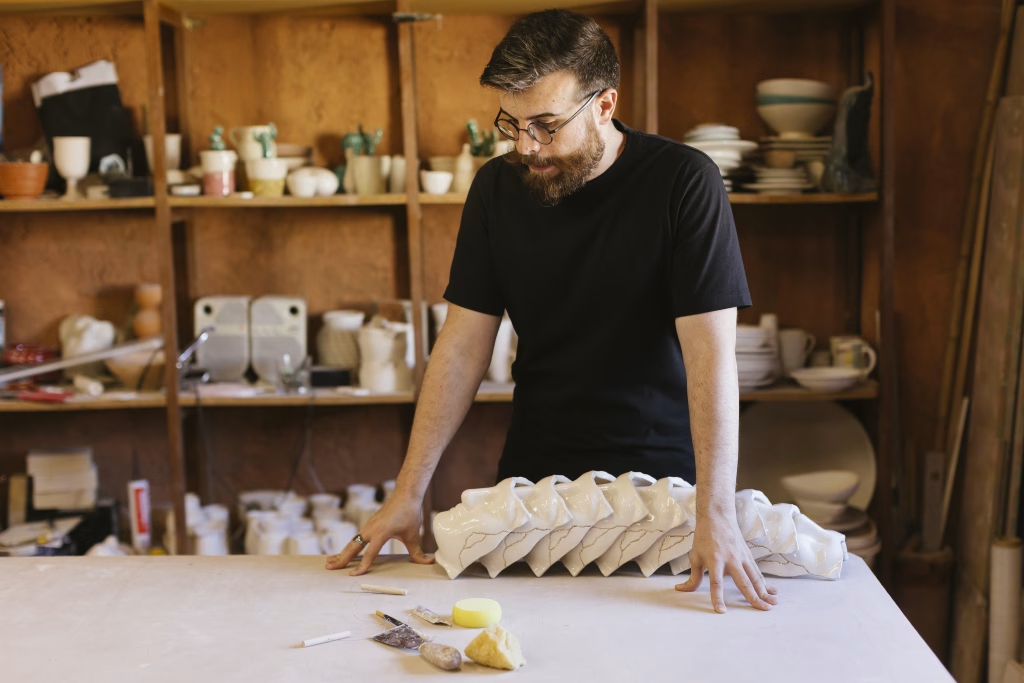
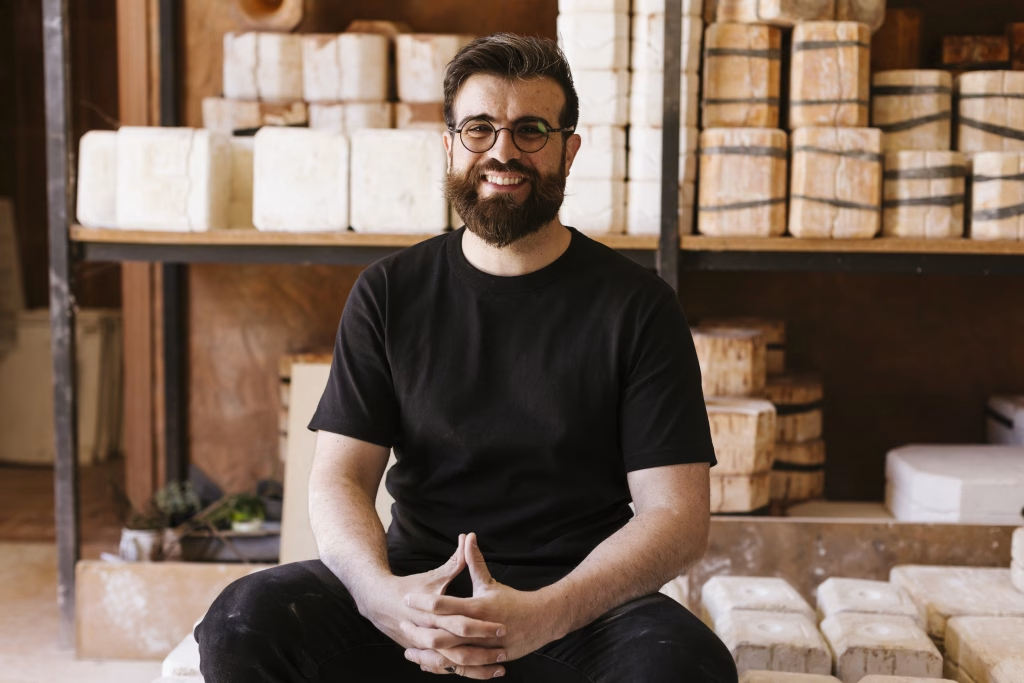
    All photographs in the book were taken by Jorge Armestar, an award-winning photographer from Peru who has been living and working in Extremadura for decades, for clients such as El País, El Mundo, la Agencia EFE or Europa Press among others. The photos feature Samuel López-Lago and Juan Manuel Pérez, the co-founder of Terracota Mérida, an avant-garde pottery atelier and design studio recognized in exhibitions such as Expo Dubai 2020, Mostra Espanha, and the Museo Nacional Centro de Arte Reina Sofía. Samuel and Juanma have been collaborating on various acclaimed creative projects since 2013.
  • From Monastic Traditions to Mental Health: A Personal Journey of Mindfulness and Belonging

    From Monastic Traditions to Mental Health: A Personal Journey of Mindfulness and Belonging

    I come from a Maronite background, an ethnoreligious group that originated in the Ancient Near East. The Maronites were early-Christians that emerged as a monastic movement and incorporated ascetic practices as part of their spiritual development and practice of Christianity. Being raised a second-generation Brit born to a family that fled to the United Kingdom on account of war, I wrestled with questions of identity and often felt a sense of otherness due to the limited diversity within my social circles and education. As diverse as London is now, throughout my childhood I often felt alone in my life story, which increased as a teenager and throughout my time attending university. Whether it was exotification, on account of my ethnic, socioeconomic or regional background, I often felt friction to integration.

    During 2010 this took a turn when I left to study in Damascus, Syria, at a time before the Arab Spring, when it was more of a trickle. Our student cohort enjoyed the beauty of the country, and I the beauty of blending into a culture that felt like a home-from-home, all the while not understanding the regional political undercurrents that were about to become life-changing for all. Everything happened rapidly as civil unrest erupted, shattering the image of the city we had come to know. I had begun to feel a real sense of belonging and attachment to the people, and this period brought to light a subconscious pain I carried, realising the impact of the civil war that forced my family to flee just three decades prior. Seeking safety and an opportunity to extend my time in the region that was cut short, I travelled to Lebanon and lived with a group of Maronite monks for three months. Throughout this time, I experienced a stark contrast to the chaos I had witnessed. I studied Arabic, taught English, and immersed myself in their prayer, meditation, and Maronite tradition. The monks and hermits I met highlighted in their lives the transformative power of meditation and connection to something greater, that was especially grounding in a perpetually unstable region like the Middle East (West Asia).

    After graduating, I chose to dedicate my early career to working in the mental health sector, recognising the intersectional relationship between many of the experiences I had encountered and impact on the mental health and wellbeing of people. As an Independent Mental Health Advocate, I had the privilege of supporting and safeguarding the rights of thousands of the most vulnerable people in society who found themselves being treated in services where their fundamental freedoms are restricted. Much like my formative experiences, I found that this too brought to light a lot of truths, notably that of the human experience, its complexity and questions of identity and belonging. It was during this time that I came into contact with the practice of mindfulness, working within a service for people with a diagnosis of personality disorder. During visits, I would find myself participating in these sessions with service users, both as a way to build rapport, but secondarily because I derived great peace through them myself. I learnt that mindfulness had widespread application within many different types of therapy, DBT, MBCT, MBSR, ACT1, to name a few. I also realised very early on that many of the practices were deeply rooted in traditions that spanned centuries and even millennia and the essence of the practices not so dissimilar to those I had come across during my time with the monks in Lebanon, albeit Christian-based.

    Fascinated to learn more, I signed up to a MBCT course after much research. I had decided that it was the right course for me, as it fit my niche interest in mindfulness as a holistic human practice and mindfulness as a therapeutic programme, with active, scientific research into the effects of regular mindfulness sessions being undertaken. The team who delivered the course provided our group with a robust but accessible introduction to daily practice of mindfulness, with the perfect balance of practical application and theoretical learning. Over the course of the first two weeks of the eight-week course, I knew that I had made the right decision to enrol. Benefits of consistent mindfulness practice became apparent, the shaping of my week around time to be present and commit to my own wellbeing and the difficulties that arose through the practices themselves as well as the scheduling of time for them, all provided me with key data points that helped me to evaluate my life. I noticed a marked increase in my confidence and resilience, and a tangible positive impact on my own mental health started emerging, as well as better productivity and overall general sense of wellbeing. I have had the privilege of sharing practices with family and friends many of whom were unaware of the evidence-based grounding that mindfulness practices have and due to the rise in openness around discussing mental health and wellbeing the conversations have been made much easier.

    Mindfulness has allowed me to address the experiences of my life through a non-narratavised lens, something that is particularly unique to the practice. When you are taught a way to break free from the stories that your mind feeds you, which are often bolstered by your physiological reaction to them, you, even if just for a moment, can experience what deep peace feels like. MBCT opened me up to the world of mindfulness in a way that gave structure and provided science to a way of being that was in front of me but not fully realised. The beauty of having what seems like an impossible feat, broken down into simple and effective steps made all the difference in applying the strategies to everyday life. I began to foster an interest in sharing mindfulness with people from atypical backgrounds like mine recognising the universal scope to connect with any foundation, cultural, religious, economic or otherwise so long as we take time to understand the breadth of human experience and meet people where they are and make it relatable. The World Health Organisation reported in 2022 that stigma around mental health is still high in all countries, but may be even higher in low- or middle-income countries. Here in the UK, I can say that I feel hopeful about how much more open society is becoming as far as talking about mental health and the ways in which alternative practices are being welcomed by major health bodies, corroborated by the new research constantly emerging. I take my experience as testament to the fact that with time many more people will have the great opportunity to access the power of mindfulness and that together we can combat the stigma around mental health and improve access to support worldwide.

    1Dialectical Behaviour Therapy (DBT), Mindfulness Based Cognitive Therapy (MBCT), Mindfulness Based Stress Reduction (MBSR) and Acceptance and Commitment Therapy (ACT)